



Banking data is under more scrutiny than ever
Banks face strict supervisory expectations on risk data aggregation, reporting, and operational resilience. Regulators expect demonstrable evidence of data quality, traceability, and ownership across every reporting cycle. At the same time, manual validation processes spread across departments slow down end-of-month reporting, increase reconciliation effort, and create compliance risk.

Regulatory pressure is increasing
Supervisors apply BCBS 239, DORA, GDPR, and the ECB Guide on effective risk data aggregation and risk reporting. Non-compliance carries fines, capital add-ons, and reputational damage.
Manual validation does not scale
Validations spread across reports, scripts, and spreadsheets create inconsistent coverage, slow incident detection, and increase audit effort.
Ownership and lineage are hard to evidence
Auditors and supervisors expect clear lineage, documented ownership, and traceable transformations across data warehouses, risk systems, and reporting layers.
What SelectZero does
Data validation
Automated data validations at every step
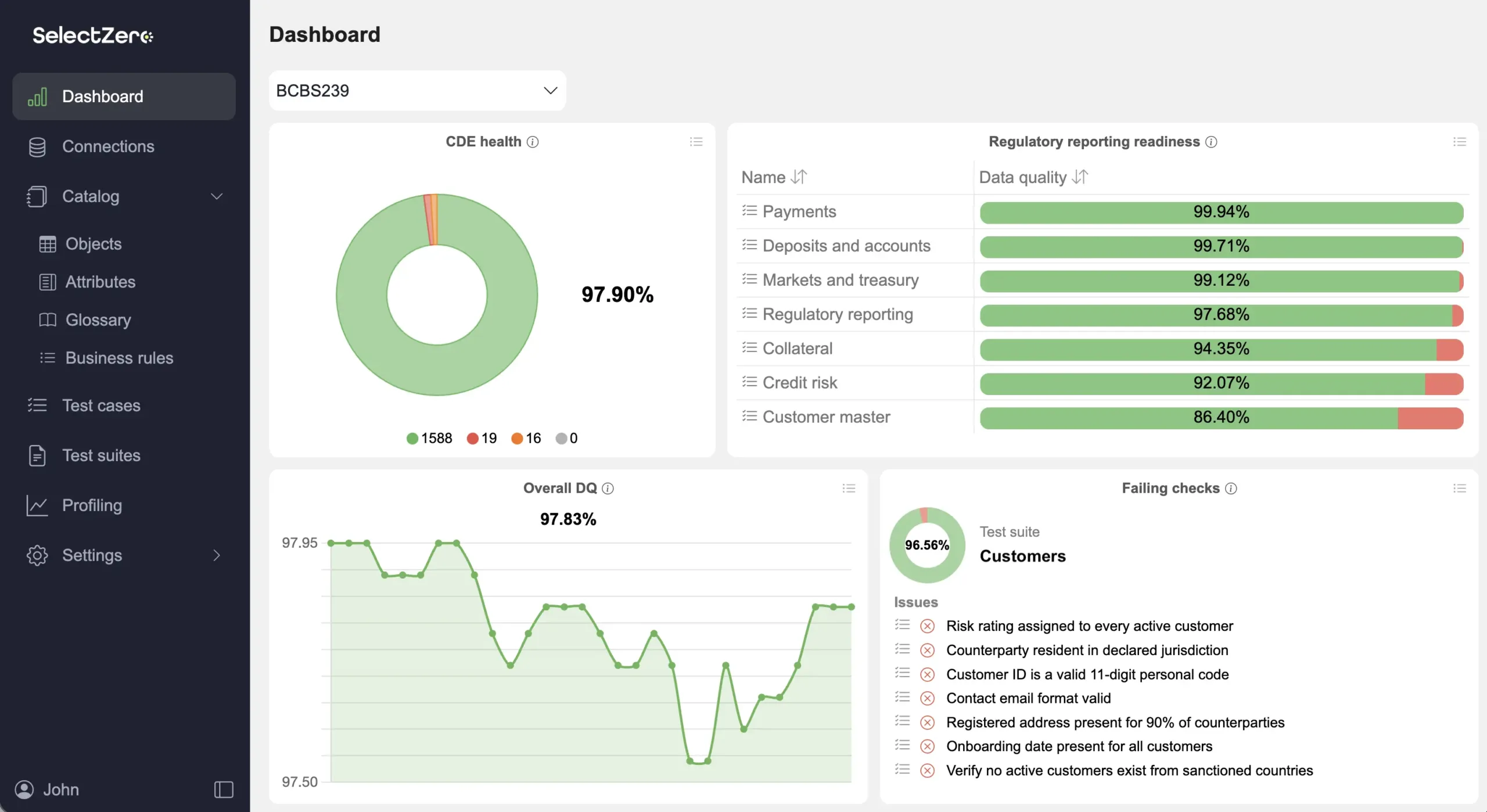
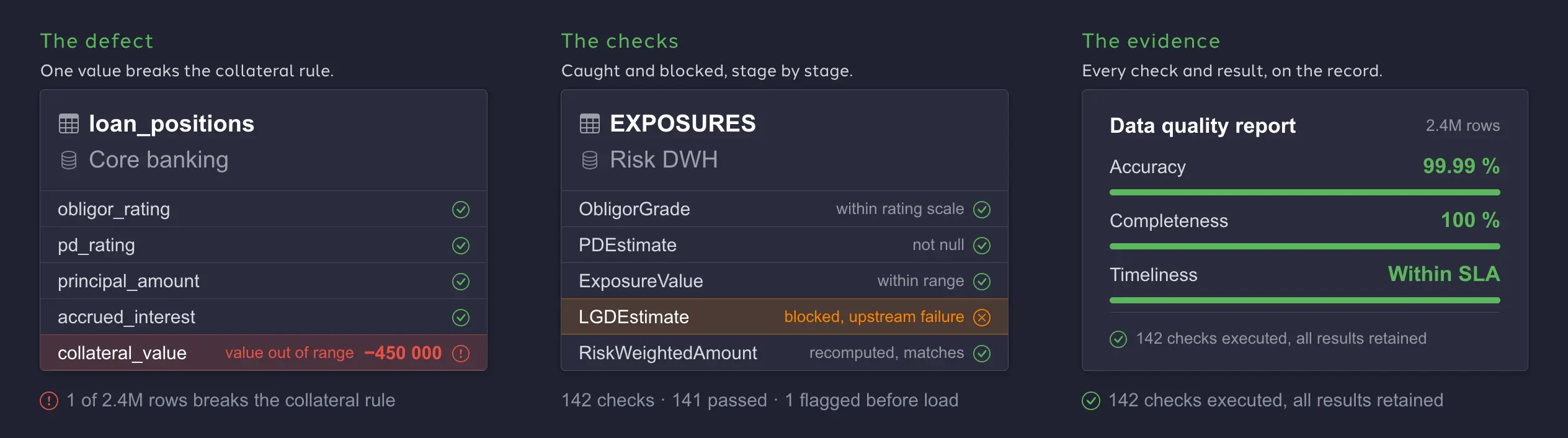
Checks run automatically across every stage, from source systems through the warehouse to whatever consumes the data. Failures are flagged and reported, and every result is retained as evidence.
Data profiling
Anomalies and deviations surface automatically
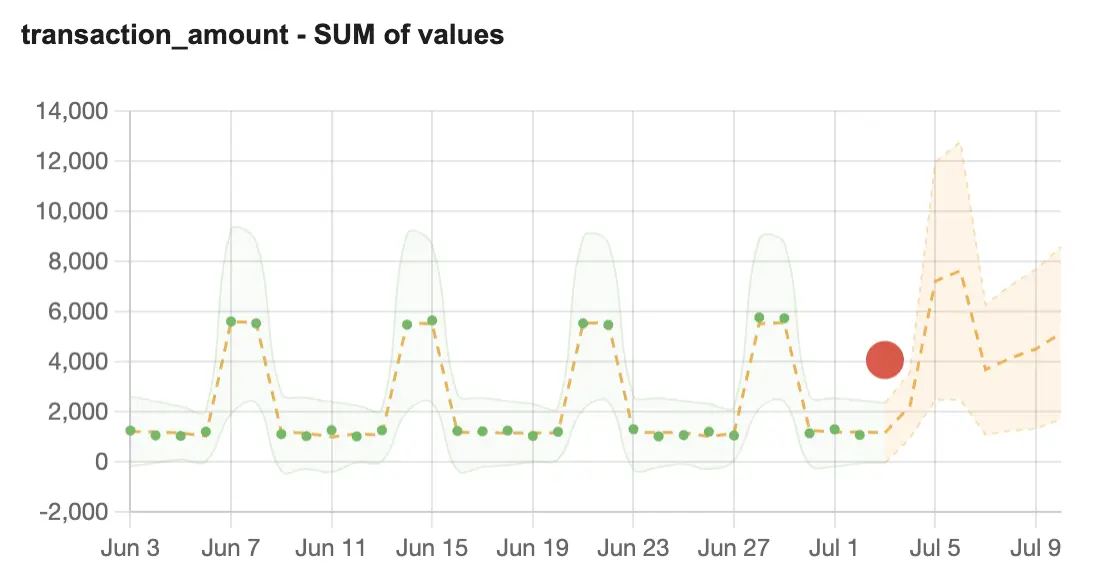
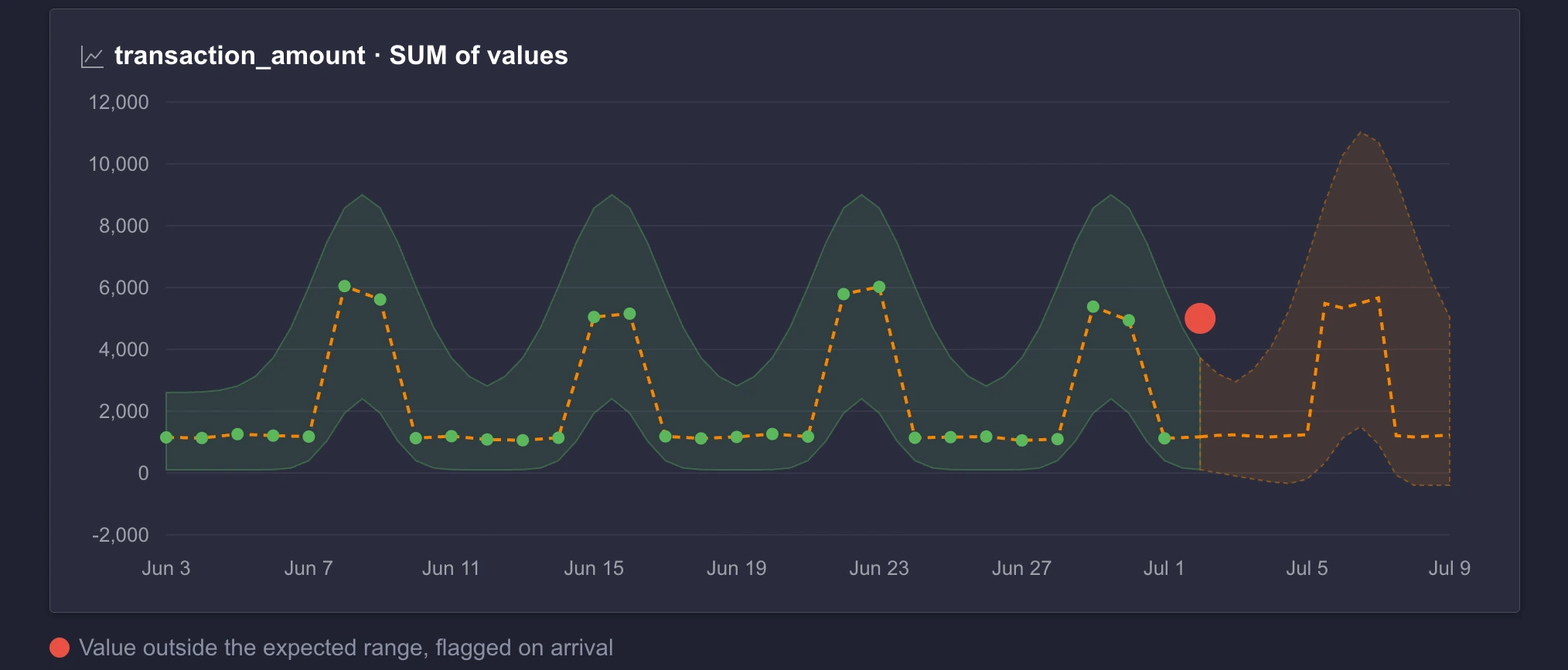
Profiling learns normal behaviour from history, including seasonality, and flags values falling outside the expected range as they arrive. Coverage extends past the checks anyone thought to define.
Data lineage
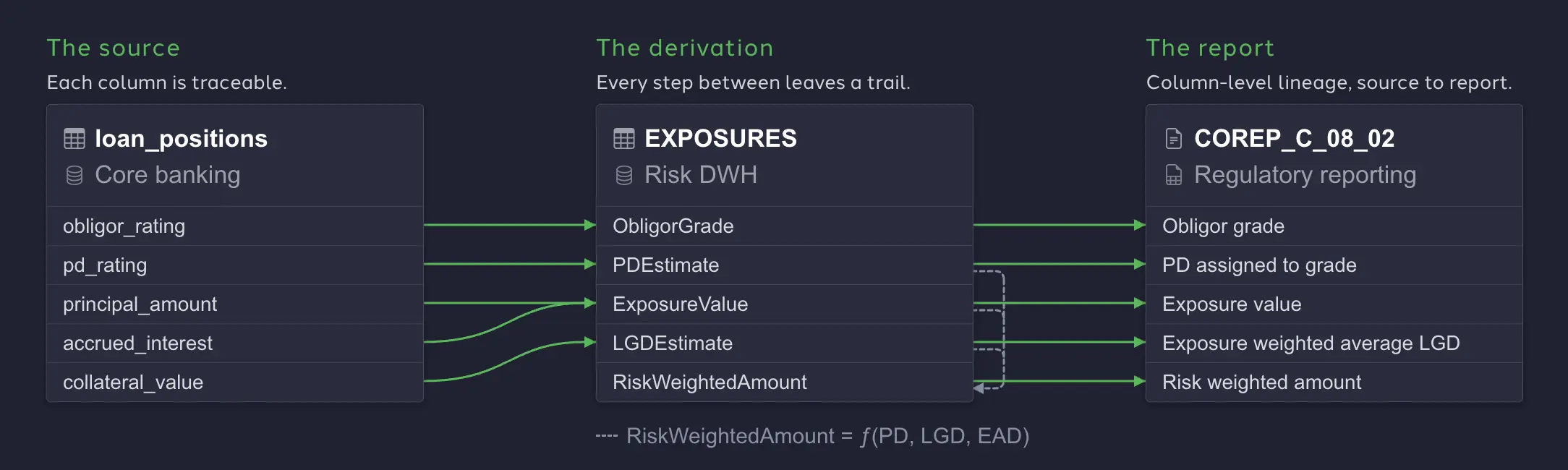
Every figure traces back to its source column
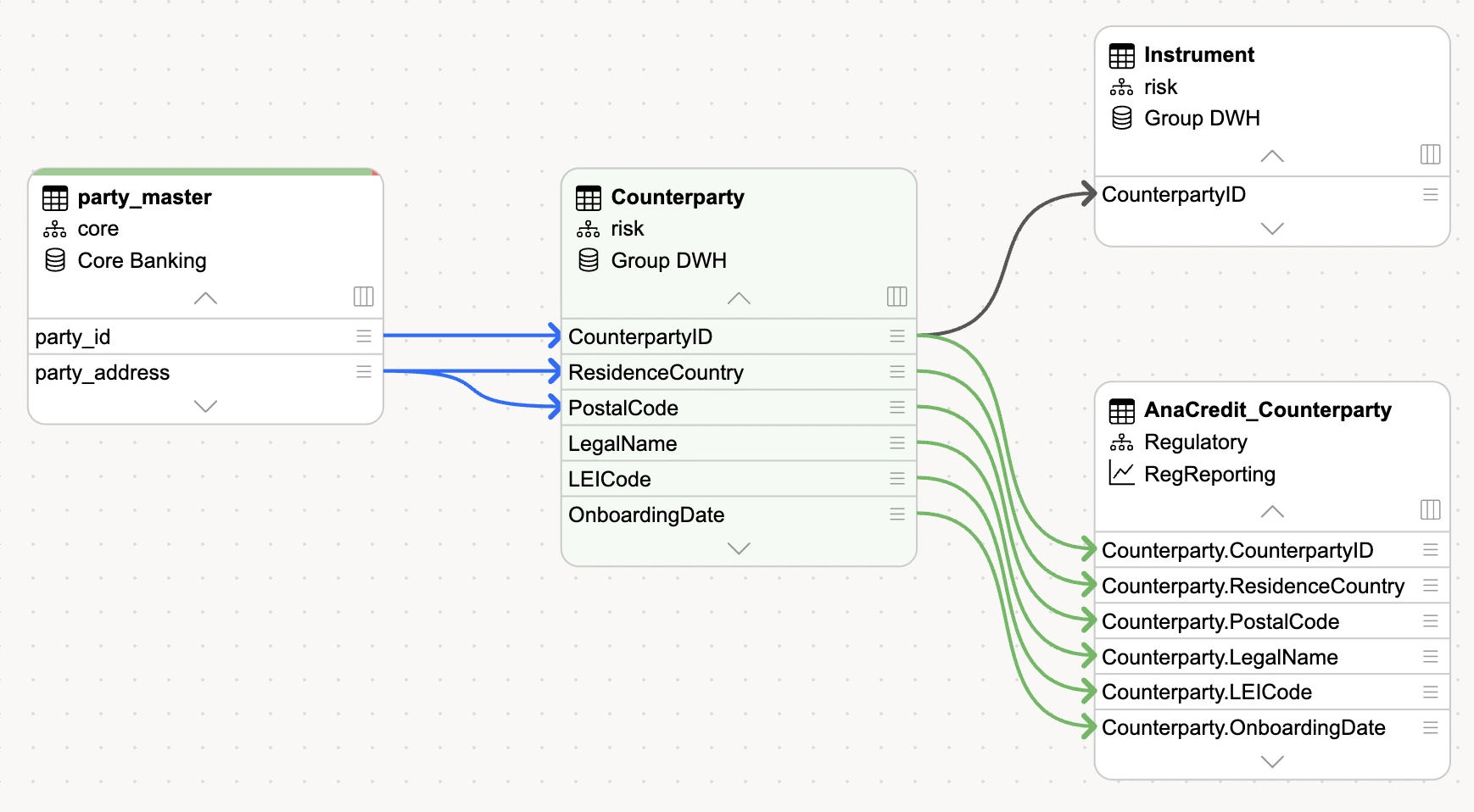
Column-level lineage across source systems, transformations, models, and dashboards. See what a change will break before making it, and trace where a wrong number came from after it appears.
Data catalog
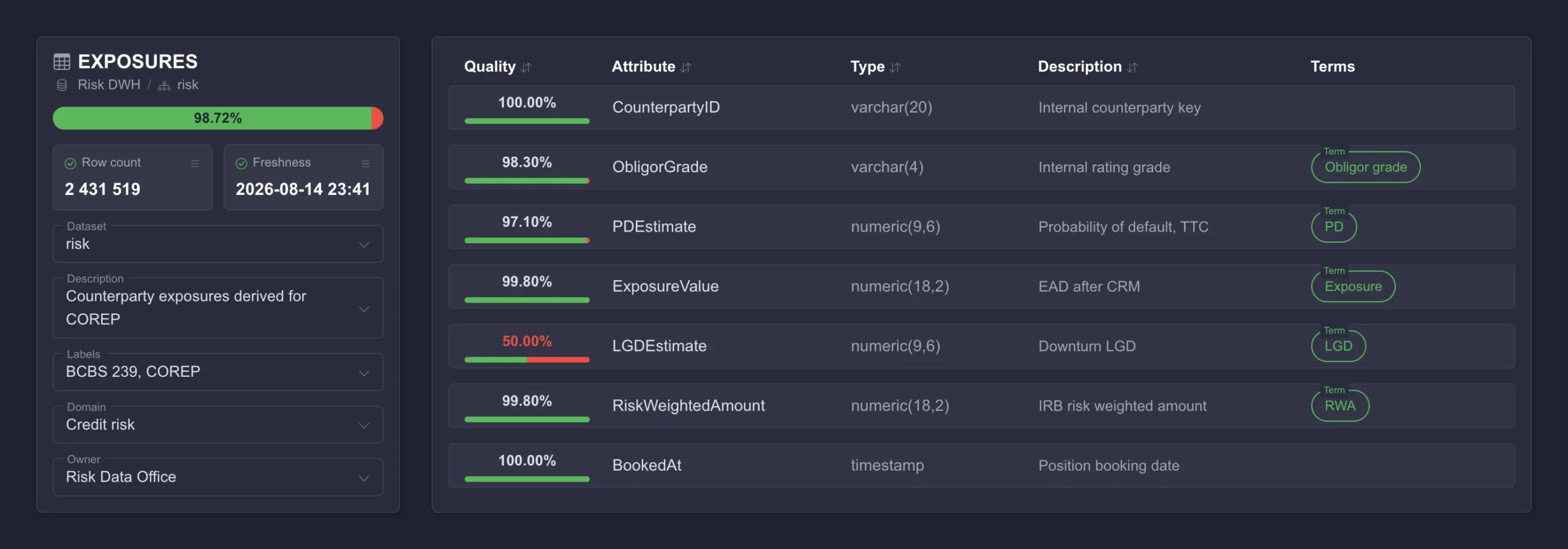
Find the right data without asking around
Search across every data asset to find the right table or column. Each one comes with its documentation, what it depends on, and its current quality status, so what exists and whether it can be trusted show up together.
Business glossary
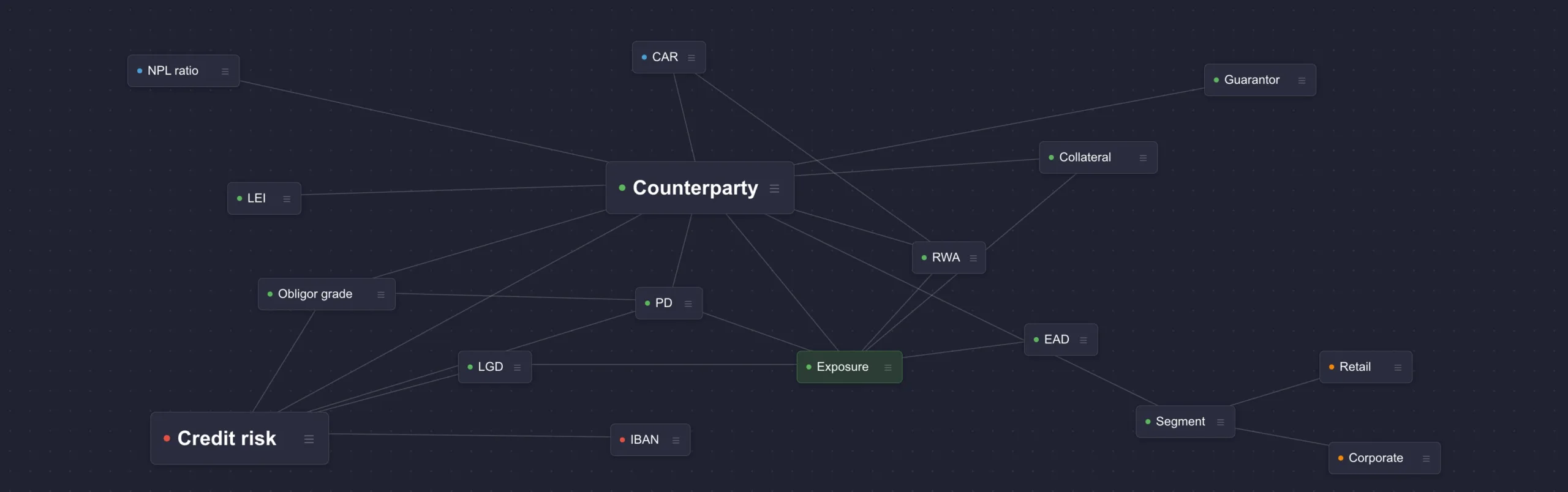
One definition, linked to the columns that implement it
Business and regulatory terms are defined once, then bound to the columns behind them. Every team uses the same definition, and it travels with the data rather than living in a separate document.
BCBS 239 & SelectZero
The Basel Committee published 14 principles for risk data aggregation and risk reporting, grouped into four categories. SelectZero capabilities map directly to the supervisory expectations across each category. Read more from our blog.
| Governance and infrastructure Principles 1 to 2 | Risk data aggregation Principles 3 to 6 | Risk reporting Principles 7 to 11 | Supervisory review Principles 12 to 14 | |
|---|---|---|---|---|
 Validations Validations |
Not covered | Covered | Covered | Not covered |
 Lineage Lineage |
Covered | Covered | Covered | Covered |
 Catalog Catalog |
Covered | Not covered | Not covered | Covered |
 Glossary Glossary |
Covered | Not covered | Covered | Not covered |
Runs inside the bank
SelectZero is installed and run entirely within existing infrastructure. No data is sent anywhere, and nothing depends on an outside service.
Connects to every source that matters
SelectZero reads the data where it already lives. Nothing is copied, moved, or duplicated into a separate system.
Data warehouses
- Snowflake
- Databricks
- Teradata
- SAP IQ
- BigQuery
- Redshift
- Vertica
- ClickHouse
- Apache Hive
Databases
- Oracle
- Microsoft SQL Server
- IBM DB2
- SAP HANA
- PostgreSQL
- MySQL
- MariaDB
- Exasol
- OpenEdge Progress
- Trino
- SQLite
Business intelligence
- Power BI
- Tableau
- SAP BusinessObjects
Files and applications
- SAS
- S3 (AWS Athena)
- SharePoint
- Excel
- CSV
- REST API
- Salesforce
Notifications
- Teams
- Slack
- Jira
- Custom APIs
Customer stories
How banks use SelectZero to meet regulatory expectations and reduce manual effort.
SEB Baltics integrated SelectZero with its data warehouses and credit risk scoring systems across Estonia, Latvia, and Lithuania. The platform replaced inconsistent, manual validation processes with automated, scheduled validation and alerting.
By standardizing validation with SelectZero, SEB improved compliance tracking for BCBS 239 and Risk Data Aggregation and Risk Reporting (RDARR). The platform identifies inconsistencies in customer risk scoring data fields, preventing errors that could lead to incorrect risk assessments and potential compliance breaches.
1000+
data validations executed on daily and monthly schedules
3 countries
covered: Estonia, Latvia, Lithuania
BCBS 239 and RDARR
compliance tracking standardized
Citadele replaced manual, departmental validation processes with SelectZero across Oracle, SAP IQ, and Databricks environments. Regular data quality check execution throughout the month identifies and resolves financial data issues in advance, removing pressure from the end-of-month reporting cycle.
Citadele is using SelectZero to improve compliance with BCBS 239 and additional regulations including DORA, GDPR, the EU AI Act, and the Guide to Internal Models. The platform provides clear evidence of data quality levels for specific compliance use cases.
End-of-month
reporting workload reduced through proactive checks
3 platforms
integrated Oracle, SAP IQ, and Databricks
BCBS 239, DORA, GDPR, EU AI Act
supported