
When you monitor data quality, finding out that something is wrong is only the beginning. The harder question is what is wrong. Is this a brand-new problem that appeared overnight or a recurring issue you thought you’d fixed last week? A single pass/fail result can’t tell you any of that. To answer it, teams have traditionally exported results from two runs and compared them by hand, row by row, which is slow, error-prone, and the kind of work nobody does consistently.
SelectZero answers the question for you with tracking row-level differences.
What are row-level differences?
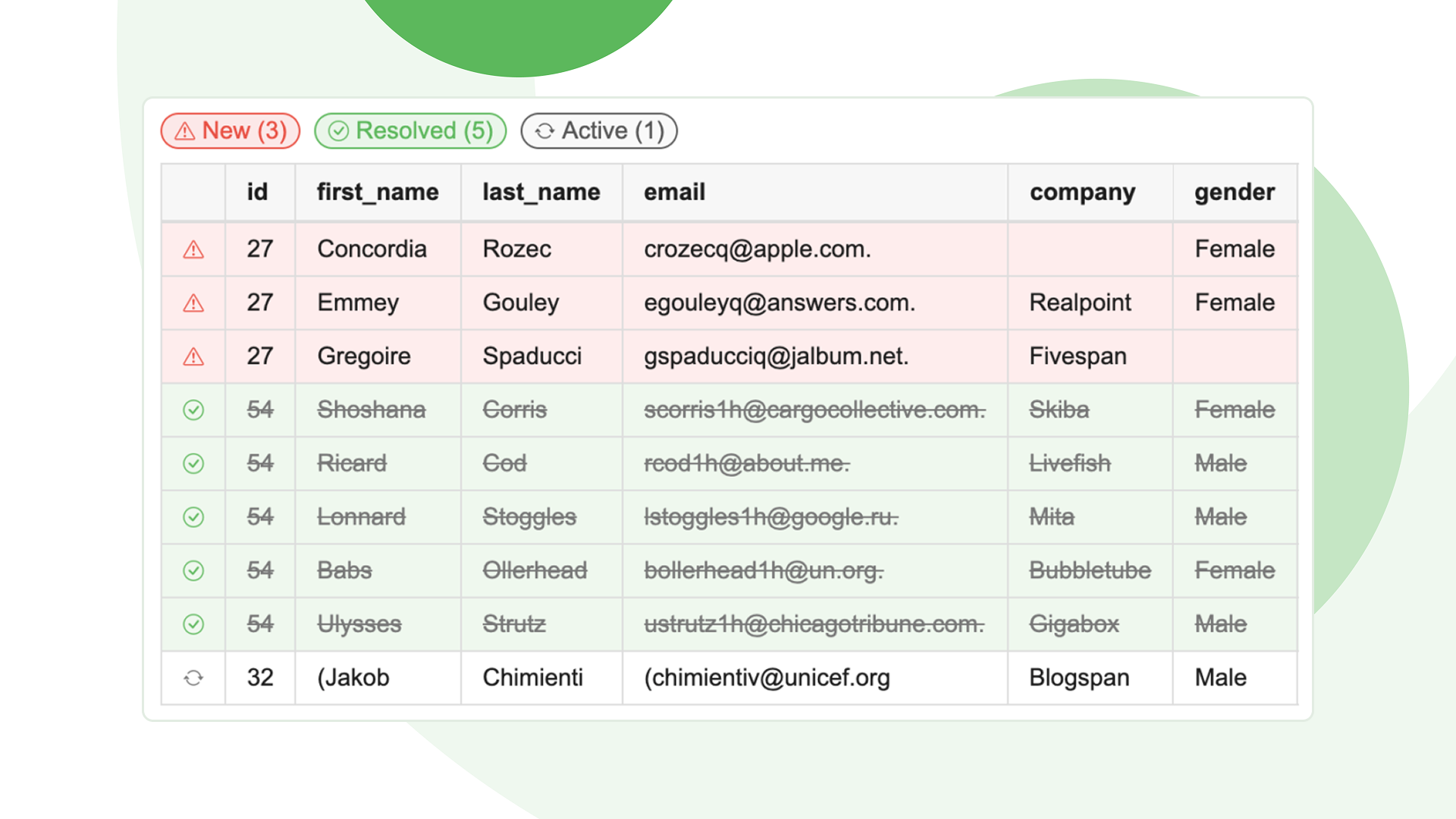
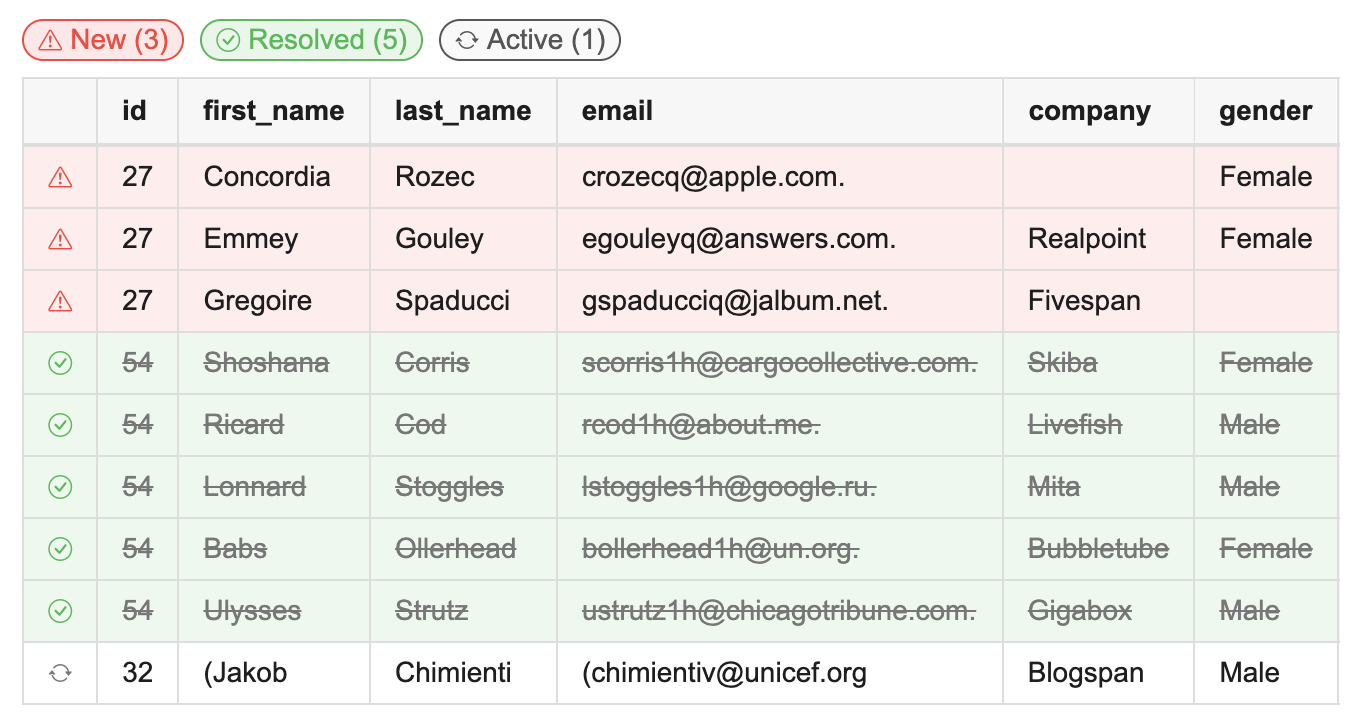
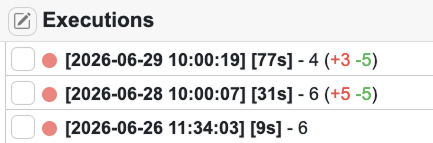
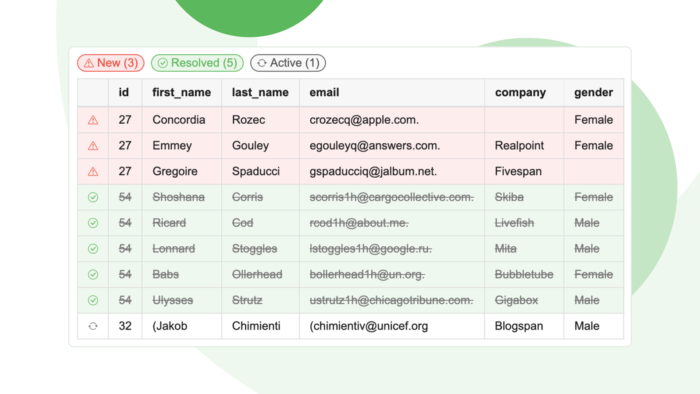
Test case results show the differences between the previous and the latest execution, directly in the execution history. Every run is automatically compared against the one before it, and each invalid row is classified into one of three states:
- New – issues that appeared in the latest run and weren’t there before.
- Resolved – rows that were flagged previously but are now valid.
- Active – issues that persist across runs and are still unresolved.
Instead of a single number that went up or down, you get a clear, row-level picture of exactly what changed since last time, and you get it without leaving the platform or cross-referencing spreadsheets.
What is the impact
You can tell whether a fix actually worked. When a team addresses a data quality issue, the obvious question is “did that resolve it?” The difference view answers it directly: the affected rows move into the Resolved state, or they don’t. No guesswork, no manual reconciliation.
You catch regressions and slow deterioration early. A check that’s been passing can start failing again, or a known issue can quietly get worse run over run. Because new and active problems are separated out, a recurring issue stops hiding inside an aggregate count and surfaces as soon as it reappears.
You spot the unexpected overnight. New rows flagged between one run and the next are exactly the early warning that something upstream changed, before it propagates into reports, models, or regulatory submissions.
For teams running complex pipelines or high data volumes, this is the shift from reactive firefighting to proactive quality management. You’re no longer just reacting to a red status, you’re tracking the trajectory of every issue over time and acting on what genuinely changed.
The outcome
Knowing that a data quality check failed tells you to look. Knowing what has changed since last time tells you what to do. Row-level execution differences turn each data validation into a running record of progress, so your team can confirm fixes, catch recurring problems, and stay ahead of new ones.
Want to see it in action? Explore SelectZero in the sandbox and walk through execution history on a sample test case, no setup required.

Release 2026.8
SelectZero release 2026.8 SelectZero 2026.8 is centred on access control and lineage. Roles now behave the way regulated environments expect them to, with visibility scoped down to the individual database and schema, [...]
Release 2026.7
SelectZero release 2026.7 SelectZero 2026.7 is one of the broadest releases so far, reaching nearly every part of the platform. The interface has been rebuilt end to end, and profiling takes a [...]

Unified data quality, catalog, and lineage: why G2 ranks SelectZero a High Performer
Most organizations don't have a data quality problem in just one system, they have one spread across ten different databases, dashboards, and pipelines that nobody fully understands anymore. SelectZero exists to close that gap: [...]
Did that fix actually work? Track row-level differences for data quality checks
When you monitor data quality, finding out that something is wrong is only the beginning. The harder question is what is wrong. Is this a brand-new problem that appeared overnight or a recurring issue [...]
SelectZero now integrates with dbt
SelectZero now ingests metadata from both dbt Core and dbt Cloud. Your dbt models, sources, seeds, snapshots, tests, and lineage flow into the SelectZero catalog and merge with metadata from every other system you [...]
Your catalog, in any AI client: SelectZero MCP server
SelectZero now ships a built-in Model Context Protocol (MCP) server. Point Claude Desktop, Cursor, Claude Code, VS Code, or any other MCP-aware client at your SelectZero instance, and your AI assistant gets first-class access [...]